
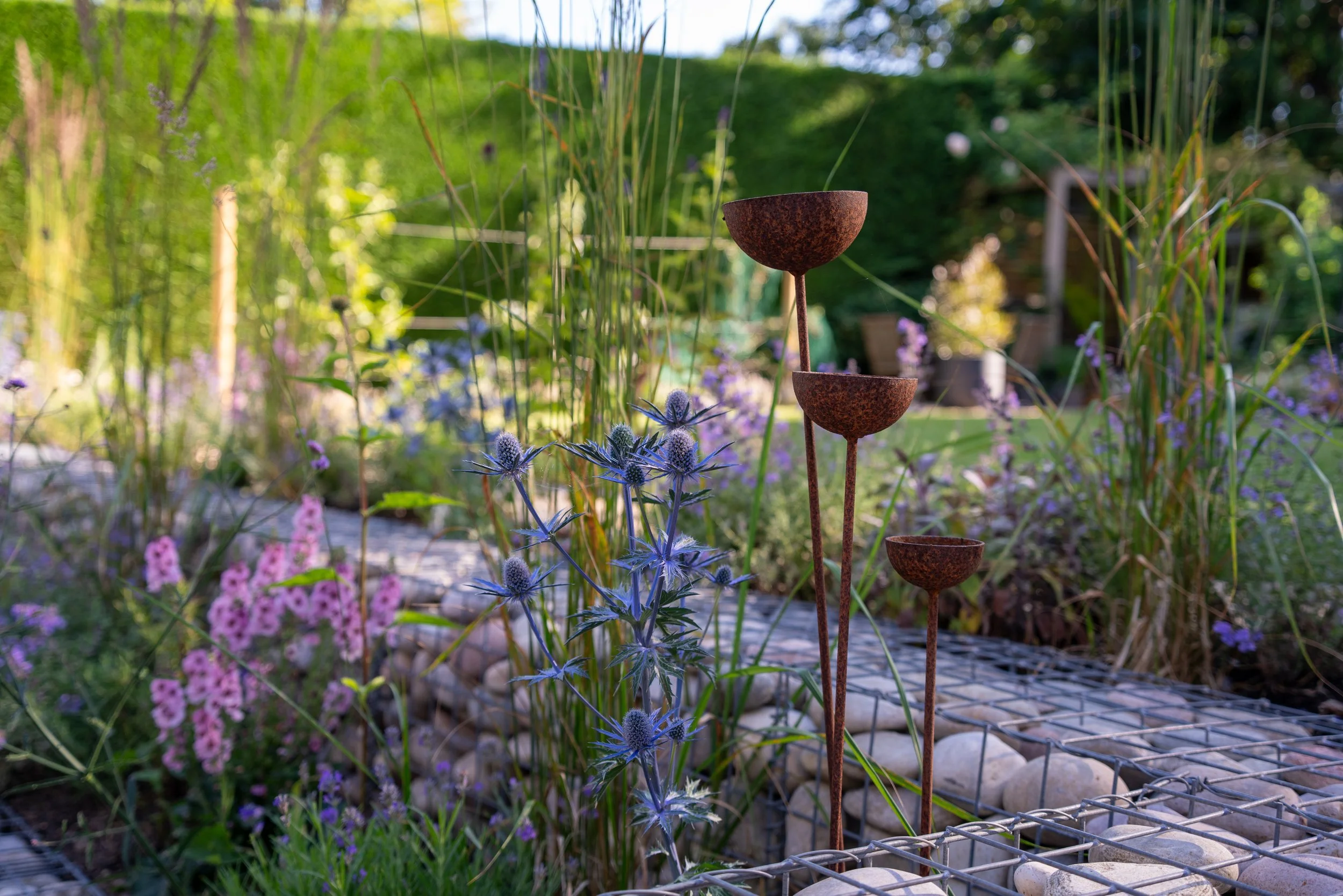
Garden design in Surrey
Paul Studholme, founder of The Plant Hunter, designs plant-led residential gardens across Surrey, with projects in Cobham, Weybridge, Guildford, Godalming and the Horsley villages. Based in East Horsley, The Plant Hunter specialises in gardens where the planting shapes the structure from the start, rather than being added once the hard landscaping is complete. Paul designs the garden and oversees its delivery through his regular team and trusted contractors, so the scheme that was drawn up is the scheme that gets planted. Projects typically start from £30,000.
Who this is for: clients commissioning a new garden from scratch, or a full redesign of an existing garden where both the layout and planting need rethinking, and who want one person responsible from the design to the finished garden.
What plant-led garden design means in practice
The result of the conventional approach is familiar: too much paving, not enough planting, and nothing holding the garden together as it matures. At The Plant Hunter, the planting is the point. Hard landscaping gives it structure to work from; the plants are what make the garden.
With over 30 years of experience, Paul knows how plants perform across the range of sites he works on, what they look like in five years, and which choices are genuinely reliable versus which look good in a catalogue and disappoint in the ground. The planting is built from that knowledge, not from a standard palette.
This is a whole-garden service: layout, structure and planting designed together from the start. For clients who already have a layout and need plant expertise applied to it, see the Planting Design page.
What this service does not cover
Garden design is not a planting-only service. If your current layout is working and the question is purely about what grows in it, Planting Design is the right starting point.
Garden design is also not a maintenance or gardening service; it ends when the garden is built and planted. For ongoing specialist oversight after completion, see the Stewardship page. If you are unsure whether your project fits, the first step is a conversation.
Recent projects
Recent work includes:
-
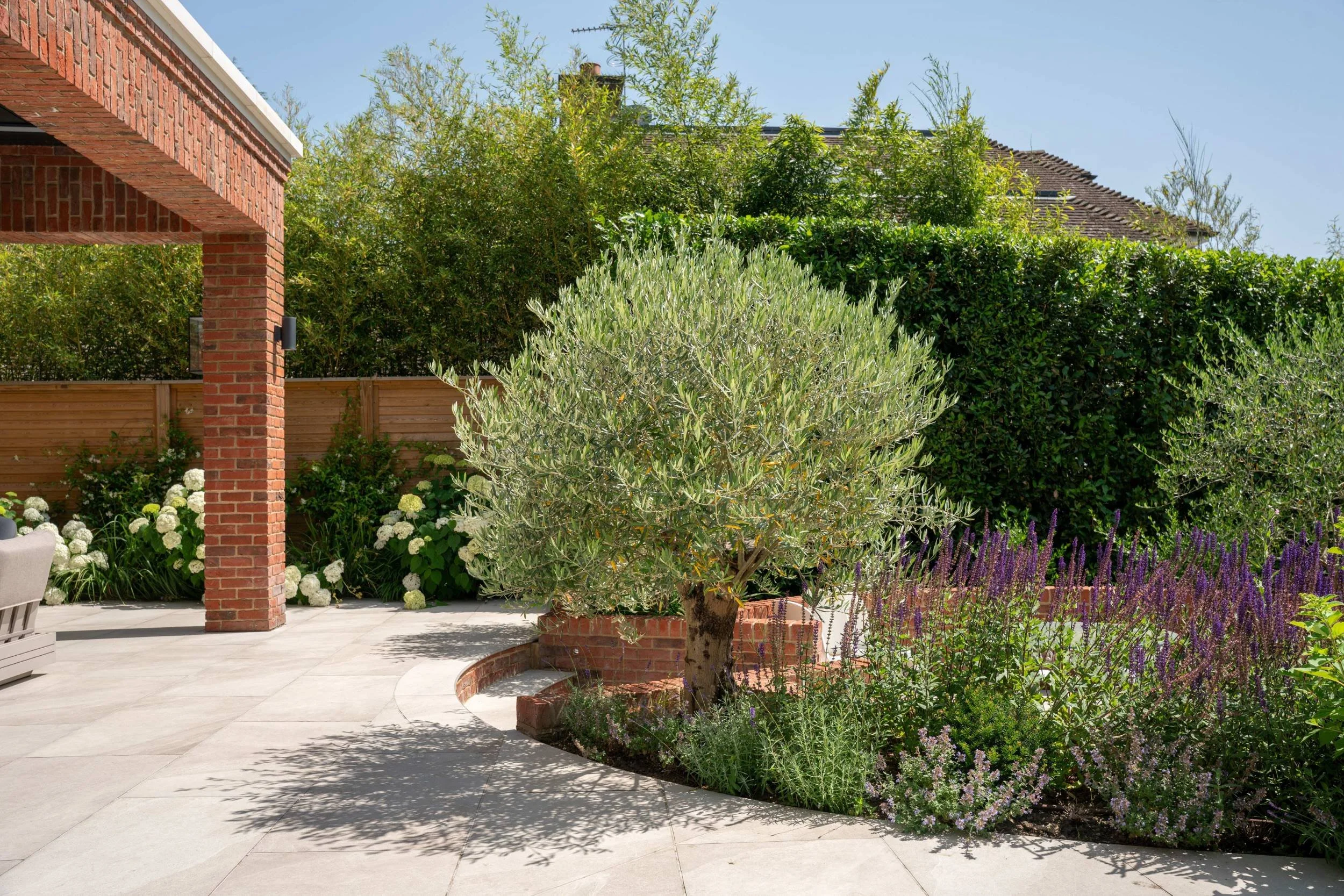
A newly planted garden, Harebell Hill, Cobham.
-
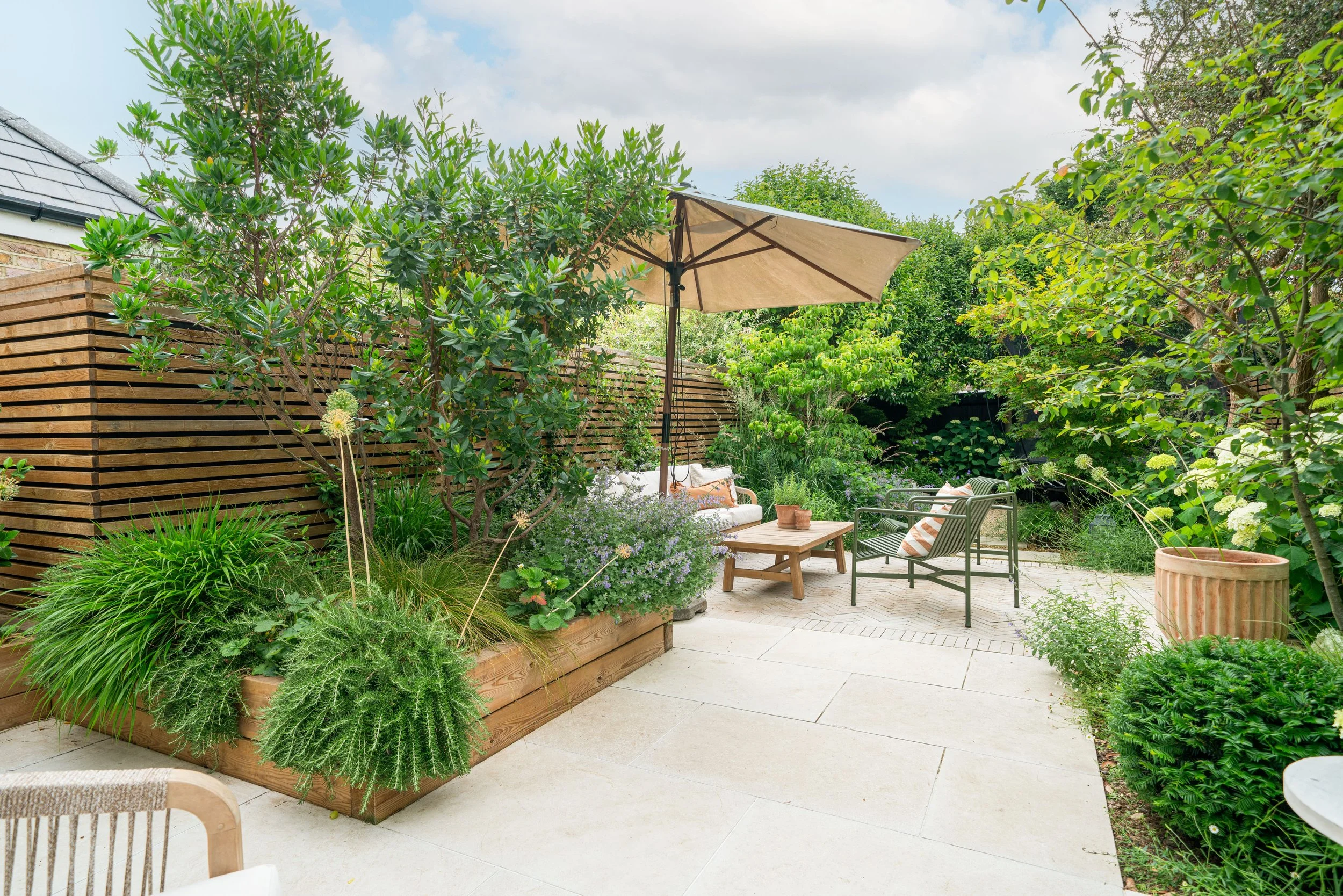
A small town garden, Cobham.
-
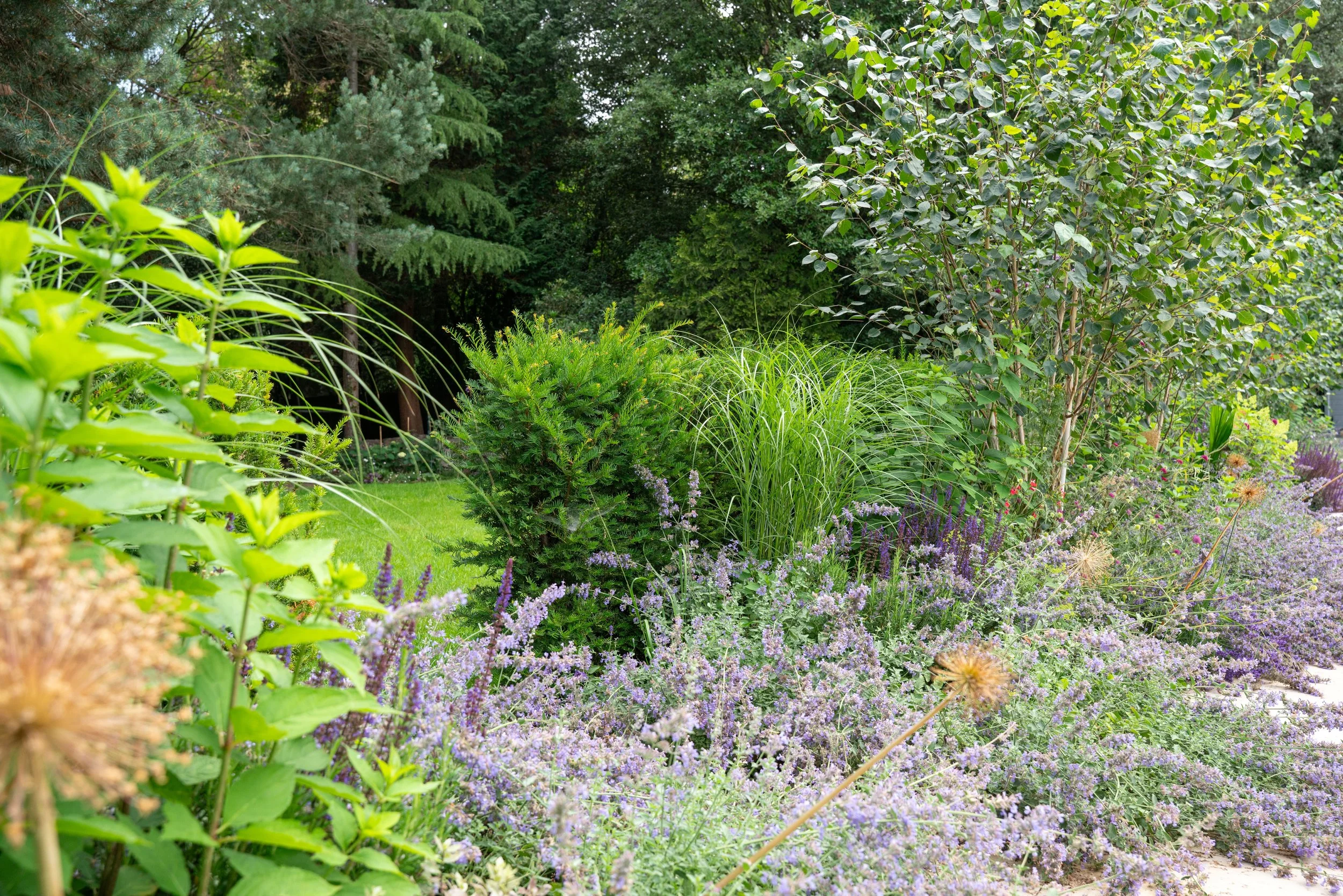
Design and planting, Weybridge.
-
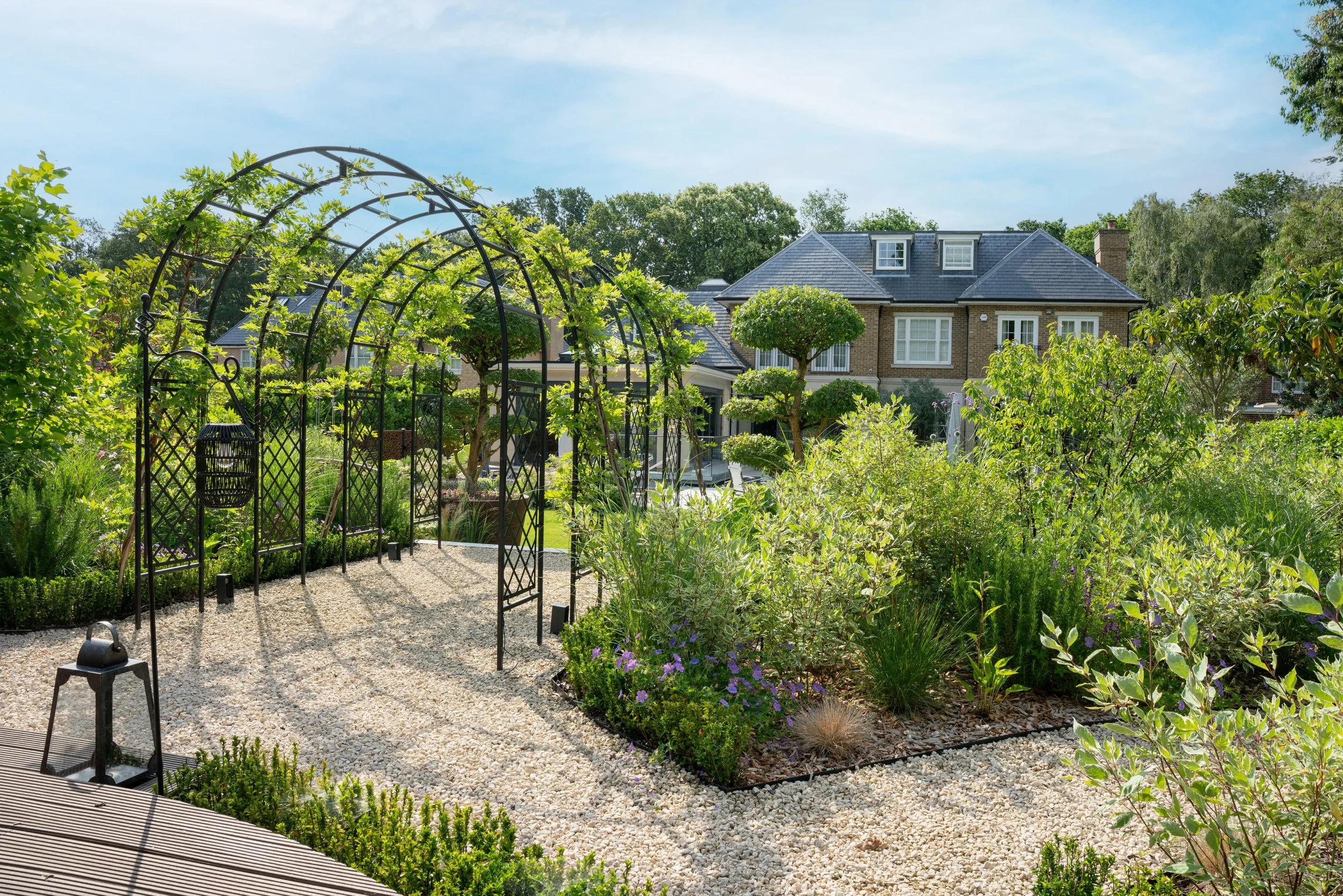
Irrigation-led scheme, Cobham.
The most common starting points
Most projects begin with one of three situations:
In each case the starting point is the same: understanding the site, the soil, the aspect, and how the garden is actually used.
The design process
Initial conversation
The process begins with a conversation by phone or email about the brief and what the client is looking to achieve.
The strongest projects are usually the ones where the brief is clear from the start: how the garden needs to function, what the client is drawn to, and what is not working now.
Site consultation
Paul arranges an initial site consultation to walk the garden together.
He is looking at several things at once: the aspect of the garden and how light moves through it across the day; the style of the house and how the garden relates to it architecturally; the style of the client, what their interior looks like, whether they lean toward something modern and clean or more classic and structured.
He looks at what is already in the garden that is worth keeping, any plants that are particularly good, and the condition of paving, surfaces and structures. He also assesses the state of the planting, whether it is overcrowded and overgrown, or in reasonable order.
Wrong layout is usually immediately obvious. The shapes jar. There are contrasting straights and random curves that do not sit comfortably next to each other, wiggly lines that have no logic, or a patio that is too small to actually sit on. Or very often the opposite problem: a garden that has no real shape at all, just a lawn with beds around the outside and nothing giving it a structure that resonates.
Design development
Paul sets out a clear brief in a follow-up communication after the initial visit. The design process follows, with clients involved at each stage.
Early layouts are usually revised several times. Paul works through circulation, sight lines, planting structure, and how the garden connects back to the house before finalising the scheme.
Materials and specimen planting are refined as the design develops, not chosen from a fixed list at the outset. The final scheme includes scaled layout drawings, planting plans and specification details where required for the build.
Design typically takes four to six weeks, depending on project scope. Larger gardens are sometimes phased over time, particularly where planting establishment and budget are better handled in stages.
Delivery
Paul designs every garden personally and can oversee its delivery through his regular team and trusted contractors where required, so the scheme that was drawn up is the scheme that gets planted.
Plants are ordered through established supplier relationships and the planting is carried through to the design.
Irrigation is usually specified alongside new planting schemes, particularly in gardens with persistent dry spots under tree canopies or against warm walls. See the Irrigation page for details on how that works.
Stewardship
A planted garden changes from the first growing season.
The first three years after installation are when it either comes into its own or starts to unravel, depending on how it is managed. Paul offers ongoing stewardship, primarily for gardens he has designed, and specialist oversight across the growing season, working alongside whoever looks after the day-to-day maintenance. See the Stewardship page for how that works.
The intention is always to create a garden that improves with age, not peaks on day one.
Garden styles
The Plant Hunter works across five styles, often combining them within a single garden.
Specimen trees
The right specimen tree gives a garden its long-term structure and character.
Paul returns to several reliably. Box-head hornbeams for clean, architectural form above a clear stem. Pleached hornbeams for screening and defined horizontal structure. Evergreen magnolia for presence and year-round foliage. Betula utilis for white bark and light canopy that works across most planting styles. Gnarly olives where conditions suit them. Prunus serrula for its exceptionally ornamental mahogany bark, which performs through every season.
Conditions that shape the gardens Paul works on
Soil across the area varies more than most people assume: heavy clay in some gardens, free-draining chalk in others, and good loamy soil with clay much further down elsewhere.
Chalk and clay need quite different planting, and the conditions that cause the most consistent problems such as winter waterlogging then summer drought, dry shade under mature trees, deer pressure on the rural edges, and hot south-facing corners, are not always about soil type alone.
Choosing for the actual conditions of the site, rather than a standard palette, is the core of how Paul works. The Planting Design page covers the plant-level detail of what performs in each of these situations.
What The Plant Hunter does not take on
Artificial grass
Heavily concrete-led schemes where construction dominates
Projects where the planting is an afterthought rather than the point
Frequently Asked Questions
-
Garden design projects with The Plant Hunter typically start from £30,000, covering the design and its delivery through Paul's regular team and trusted contractors. Paul outlines costs clearly after the initial site consultation.
-
Primarily across Surrey: East Horsley, Cobham, Weybridge, Virginia Water, Guildford and the surrounding villages.
-
The design process typically takes four to six weeks from the initial site consultation, depending on project scope and workload. Larger projects are sometimes phased over time.
-
Paul walks the garden with the client and looks at several things at once: aspect and light, the style of the house and how the garden relates to it, what is already there that’s worth keeping, and the condition of surfaces and existing planting. He is also forming a picture of what the client is drawn to. Most layout problems are obvious from the first few minutes.
-
The final scheme includes scaled layout drawings, planting plans, and specification details where required for the build. Materials and specimen planting are refined through the design process rather than chosen from a fixed list at the outset.
-
Paul designs every garden personally and can oversee delivery through his regular team and trusted contractors where required. This keeps the scheme that was designed as the scheme that gets planted.
-
Yes. The Garden Appraisal is one visit of up to two hours and a written report on what you have and what to do with it. It is a separate service and does not lead to a design unless you ask for one.
What happens after you get in touch
It starts with a conversation, by phone or email, about the garden and what you want from it. If the project is a fit, Paul arranges a site consultation and walks the garden with you; if it isn't, he will say so at that first conversation. After the visit, costs are outlined clearly in a proposal against the actual site, and the design process runs as set out above. Paul takes on a limited number of projects each year.